📱 Introduction
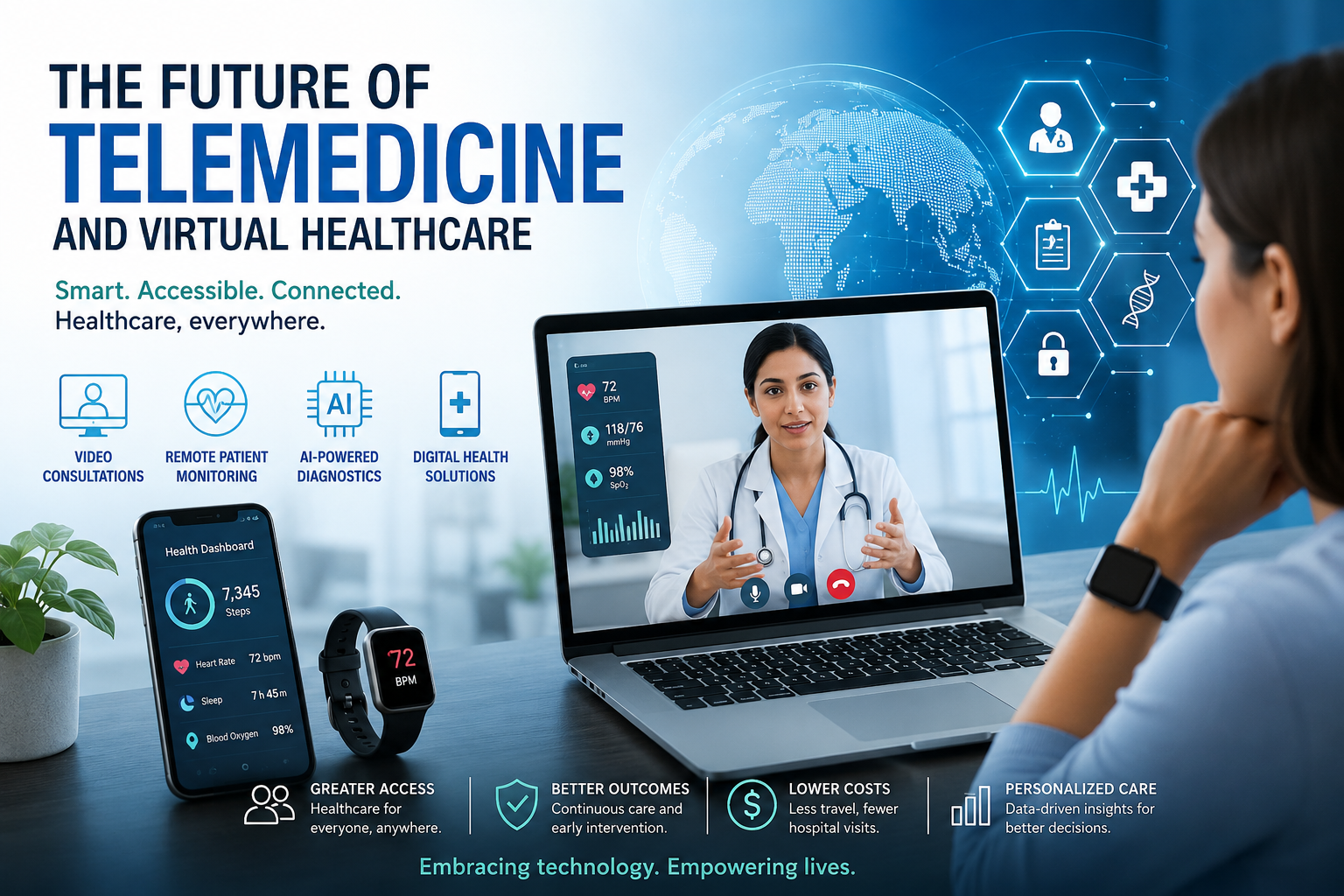
Telemedicine has evolved from a convenient alternative during emergencies into one of the most important pillars of modern healthcare. With advancements in artificial intelligence (AI), wearable health devices, high-speed internet, and secure cloud technology, virtual healthcare is becoming more accessible, efficient, and personalized than ever before.
Patients can now consult doctors from the comfort of their homes, receive remote monitoring for chronic illnesses, access mental health support online, and even undergo AI-assisted diagnosis—all without stepping into a hospital unless necessary.
In this comprehensive guide, we’ll explore the future of telemedicine, emerging technologies, benefits, challenges, and what healthcare will look like over the next decade.
🏥 What Is Telemedicine?


Telemedicine refers to the delivery of healthcare services using digital communication technologies such as:
- 📹 Video consultations
- 📞 Phone appointments
- 💬 Secure messaging
- 📱 Mobile health applications
- ⌚ Wearable monitoring devices
- 🤖 AI-powered virtual assistants
Rather than replacing traditional healthcare, telemedicine complements in-person medical care by making healthcare more convenient and efficient.
🌍 Why Telemedicine Is Growing So Quickly
Several factors are driving the rapid adoption of virtual healthcare.
🚀 1. Faster Internet
5G networks and fiber broadband enable high-quality video consultations with minimal delays.
📱 2. Smartphone Adoption
Billions of people now have smartphones capable of connecting them to healthcare professionals instantly.
🤖 3. Artificial Intelligence
AI helps doctors by:
- Detecting diseases earlier
- Prioritizing urgent patients
- Analyzing medical images
- Supporting diagnosis
- Recommending treatment plans
⌚ 4. Wearable Technology
Devices continuously monitor:
- Heart rate
- Blood oxygen
- Sleep quality
- Blood pressure
- Activity levels
- ECG readings
These devices allow physicians to monitor patients remotely.
🏥 5. Healthcare Accessibility
Telemedicine bridges healthcare gaps in:
- Rural communities
- Remote villages
- Elderly populations
- Disabled individuals
- Busy professionals
💡 Major Benefits of Telemedicine
⏰ Saves Time
Patients avoid:
- Long travel
- Waiting rooms
- Traffic
- Scheduling delays
Appointments often begin within minutes.
💰 Lower Healthcare Costs
Virtual consultations often reduce:
- Transportation expenses
- Lost work hours
- Hospital visits
- Emergency room admissions
Healthcare providers also lower operational costs.
❤️ Better Chronic Disease Management
Patients with chronic conditions benefit from continuous monitoring.
Examples include:
- Diabetes
- Hypertension
- Heart disease
- Asthma
- COPD
Doctors receive real-time health updates, allowing earlier interventions.
🧠 Improved Mental Health Access


Virtual therapy has made counseling far more accessible.
Benefits include:
- Greater privacy
- Flexible scheduling
- Lower travel burden
- Better continuity of care
- Increased access to specialists
👩⚕️ Access to Specialists
Patients living far from major hospitals can consult:
- Cardiologists
- Neurologists
- Dermatologists
- Pediatricians
- Endocrinologists
- Psychiatrists
without traveling long distances.
🤖 AI Is Revolutionizing Virtual Healthcare
Artificial Intelligence is making telemedicine smarter every year.
AI Chatbots
Modern healthcare chatbots can:
- Collect symptoms
- Suggest urgency
- Schedule appointments
- Provide medication reminders
- Answer common health questions
AI Diagnostic Support
AI systems assist doctors by analyzing:
- X-rays
- MRI scans
- CT scans
- Blood reports
- Skin images
This improves efficiency and helps identify patterns that may require further review.
Predictive Healthcare
AI can analyze health trends to estimate the likelihood of complications before symptoms become severe.
This enables preventive care instead of reactive treatment.
⌚ Wearable Health Devices
Wearables are becoming an essential part of virtual healthcare.
Popular examples include:
- Smartwatches
- Fitness bands
- Continuous glucose monitors
- Smart blood pressure monitors
- Portable ECG devices
These devices collect real-time data and securely share it with healthcare providers.
🏡 Hospital-at-Home Programs
Future healthcare increasingly brings hospital-level services into patients’ homes.
Patients may receive:
- Remote monitoring
- Virtual doctor rounds
- Home nursing visits
- Medication management
- Oxygen monitoring
- Digital rehabilitation
This can improve comfort while reducing pressure on hospitals for eligible patients.
🌐 Remote Patient Monitoring
Remote Patient Monitoring (RPM) continuously tracks patient health.
Common metrics include:
- Heart rate
- Blood sugar
- Blood pressure
- Weight
- Respiratory rate
- Oxygen saturation
Doctors receive alerts when readings fall outside expected ranges, allowing timely follow-up.
📊 Electronic Health Records (EHR)
Future telemedicine platforms increasingly integrate:
- Medical history
- Laboratory results
- Prescriptions
- Vaccination records
- Imaging reports
Integrated records reduce duplication and improve care coordination.
🧬 Personalized Medicine
AI combines information such as:
- Lifestyle habits
- Medical history
- Family history
- Wearable data
- Laboratory results
to support personalized treatment recommendations under clinician oversight.
🌎 Rural Healthcare Transformation
Telemedicine has enormous potential for underserved areas.
Benefits include:
- Faster specialist access
- Reduced travel costs
- Earlier diagnosis
- Follow-up care from home
- Improved maternal and child healthcare
- Better emergency triage
👶 Telemedicine Across Age Groups
Children
- Pediatric consultations
- Vaccination guidance
- Nutrition counseling
Adults
- Chronic disease management
- Lifestyle coaching
- Preventive care
Seniors
- Medication reviews
- Fall risk monitoring
- Home health consultations
- Regular follow-ups
🔒 Cybersecurity and Patient Privacy
As virtual healthcare expands, protecting patient information becomes even more important.
Healthcare organizations invest in:
- End-to-end encryption
- Multi-factor authentication
- Secure cloud infrastructure
- Identity verification
- Continuous security monitoring
Patients should also use trusted platforms and secure internet connections.
🌍 Global Healthcare Without Borders
Patients increasingly access international expertise through virtual consultations.
This enables:
- Second opinions
- Cross-border specialist care
- Medical education
- Collaborative treatment planning
subject to local regulations and licensing requirements.
🚧 Challenges Facing Telemedicine
Despite rapid growth, challenges remain.
Internet Connectivity
Reliable broadband is still unavailable in some areas.
Digital Literacy
Some patients need support using healthcare technology.
Privacy Concerns
Strong security practices are essential to maintain trust.
Physical Examinations
Certain conditions still require in-person assessment or testing.
Regulatory Differences
Licensing, reimbursement, and data protection rules vary across regions.
🔮 Future Trends in Virtual Healthcare
Healthcare over the next decade may include:
- 🤖 AI-powered virtual medical assistants
- 🥽 Augmented and virtual reality for rehabilitation and medical training
- 🧠 Digital twins to simulate treatment responses
- 🧬 Greater use of genomic information in personalized care
- 🚑 Faster emergency triage using connected devices
- 🌐 More interoperable health records
- 🏠 Expansion of hospital-at-home services
- 📡 Continuous remote monitoring through smart sensors
🌱 How Patients Can Prepare
To make the most of telemedicine:
- Keep your medical records organized.
- Use trusted telehealth platforms.
- Wear compatible health-monitoring devices if recommended by your healthcare provider.
- Test your internet connection before appointments.
- Prepare a list of symptoms and medications in advance.
- Follow up in person when your clinician advises.
📝 Conclusion
Telemedicine is no longer just a convenience—it is becoming a core part of modern healthcare. Advances in AI, wearable devices, remote monitoring, and secure digital platforms are making healthcare more connected, personalized, and accessible.
While virtual care cannot replace every in-person visit, it can complement traditional medicine by improving access, supporting preventive care, and enabling earlier intervention for many conditions. As technology continues to evolve, the future of healthcare is likely to be a hybrid model that combines the strengths of both digital and face-to-face care, helping patients receive timely, high-quality treatment wherever they are.