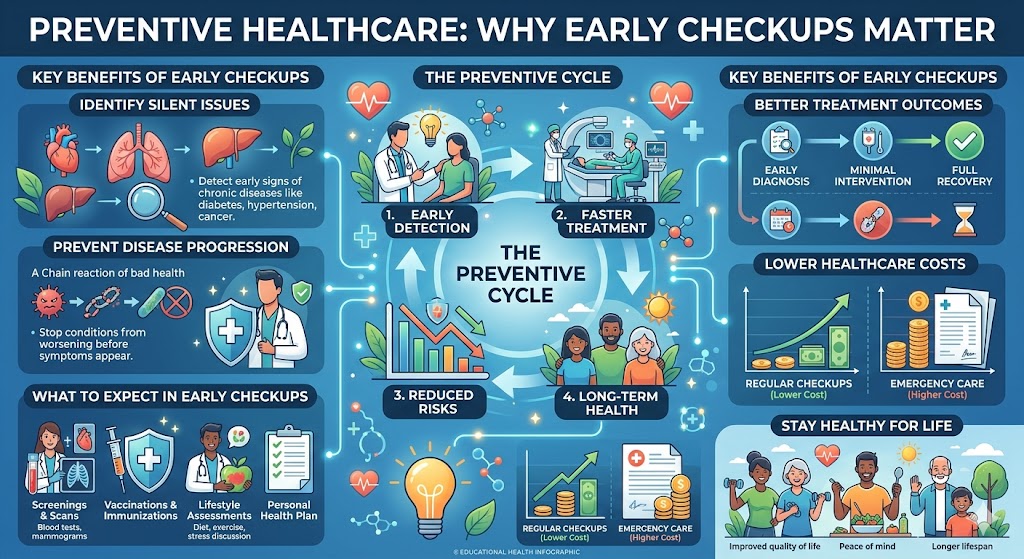
Preventive healthcare focuses on identifying health risks before they become serious problems. Instead of waiting for symptoms to appear, regular medical checkups help detect conditions early, improve treatment outcomes, and reduce long-term healthcare costs.
What Is Preventive Healthcare?
Preventive healthcare refers to routine health services such as screenings, vaccinations, and physical examinations designed to prevent illness or catch diseases at an early stage. Organizations like the World Health Organization emphasize prevention as a key pillar of global health because it reduces the burden of chronic diseases and improves life expectancy.
Common preventive measures include:
- Annual physical exams
- Blood pressure and sugar level tests
- Cancer screenings (such as breast, cervical, and colon checks)
- Immunizations and booster shots
- Lifestyle counseling (diet, exercise, smoking cessation)
Why Early Checkups Are Important
Early checkups play a critical role in detecting silent or slow-developing conditions such as diabetes, hypertension, and certain cancers. Many of these diseases do not show symptoms in their initial stages, making regular screening essential.
Early detection offers several advantages:
- Better treatment success: Conditions caught early are usually easier to treat
- Lower healthcare costs: Preventing complications reduces expensive treatments later
- Reduced risk of complications: Early management prevents disease progression
- Improved quality of life: Patients can maintain normal routines with timely care
Who Should Prioritize Preventive Care?
Preventive care is important for everyone, but certain groups benefit even more:
- People over 40 years of age
- Individuals with family history of chronic diseases
- Those with unhealthy lifestyle habits (smoking, poor diet, inactivity)
- People with existing health conditions needing regular monitoring
Even young adults should not ignore routine checkups, as early habits strongly influence long-term health outcomes.
Common Barriers to Regular Checkups
Despite its importance, many people delay preventive care due to:
- Lack of awareness about silent diseases
- Cost concerns
- Busy schedules
- Fear of diagnosis
However, skipping routine checkups often leads to delayed detection, which can make treatment more complicated and expensive.
Conclusion
Preventive healthcare is one of the most effective ways to maintain long-term health and well-being. Early checkups help detect diseases before they become serious, improve treatment success rates, and reduce overall healthcare costs. By making regular health screenings a habit, individuals can take proactive control of their health and lead longer, healthier lives.