Category: Exercise & Training · SEO keyword: 30-day home workout plan
Starting a fitness journey does not require an expensive gym membership, special equipment, or hours of exercise every day. With a little space at home, comfortable clothes, and a consistent routine, beginners can start building strength, improving stamina, and developing healthier habits.
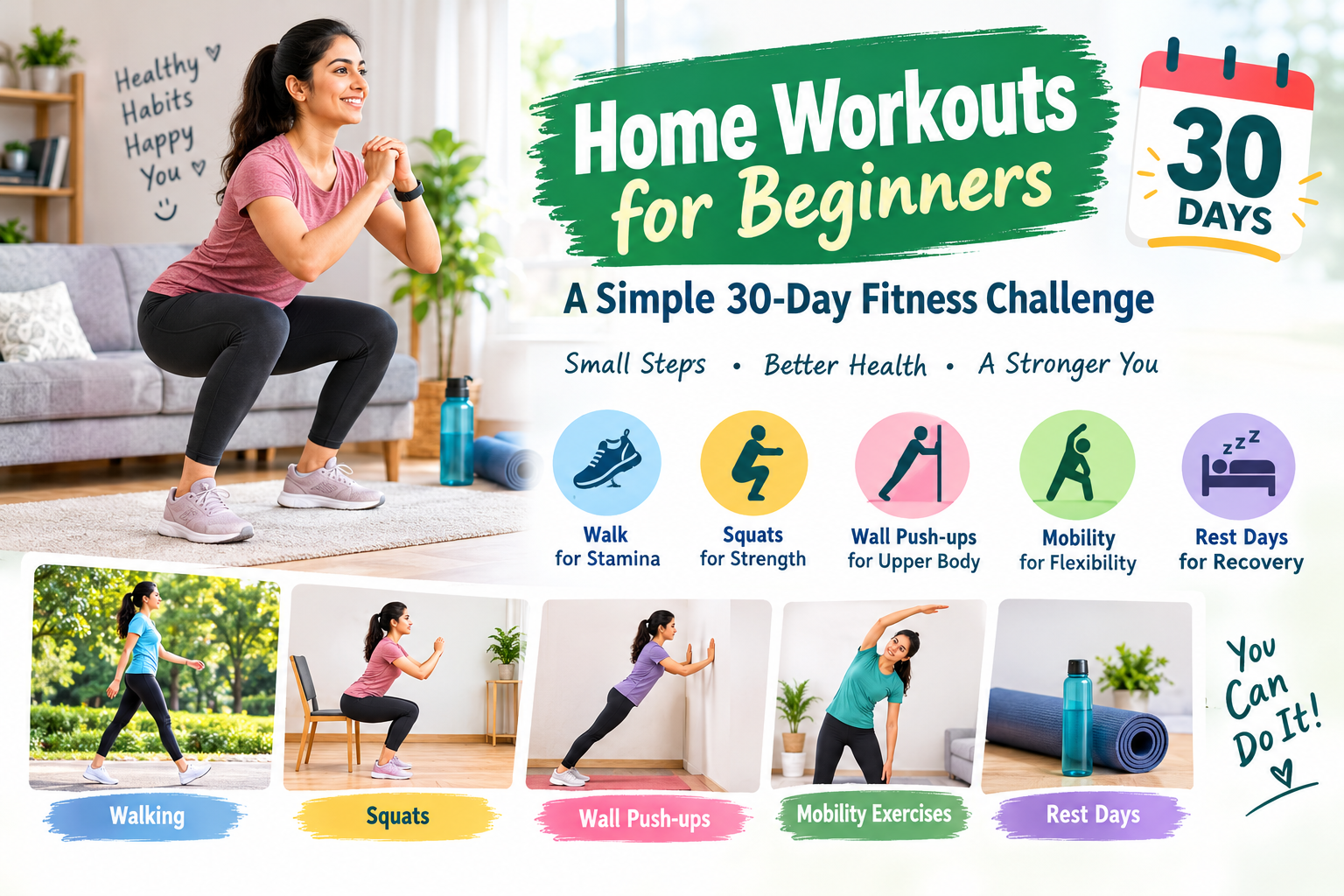
A 30-day home workout plan is a practical way to make exercise part of your daily life. By combining walking, squats, wall push-ups, mobility exercises, and regular rest days, you can gradually increase your activity level without putting unnecessary pressure on your body.
The key is to start slowly, maintain proper form, and focus on consistency rather than perfection. Whether you want to become more active, improve your fitness, or establish a healthy routine, this beginner-friendly challenge offers a simple place to start.
Why Choose a 30-Day Home Workout Plan?


A home workout routine removes several common barriers to exercise. You do not need to travel to a gym, purchase expensive equipment, or follow a complicated training program.
Here are some potential benefits of regular physical activity:
- Improved stamina: Walking and gradually increasing activity can help you perform everyday tasks more comfortably.
- Stronger muscles: Squats and wall push-ups help beginners develop lower- and upper-body strength.
- Better mobility: Gentle movements can help maintain joint movement and flexibility.
- Heart health: Regular walking and other aerobic activities support cardiovascular fitness.
- Stress management: Physical activity can support mood and overall well-being.
- Healthy habits: A structured 30-day challenge makes it easier to establish a consistent routine.
Remember that 30 days is a starting point, not a deadline for a dramatic physical transformation. Results depend on your starting fitness, nutrition, sleep, consistency, and individual health.
What You Need Before Starting
You only need a few basic items:
- Comfortable clothing and supportive footwear for walking.
- A sturdy wall for wall push-ups.
- A stable chair for balance or support during squats, if needed.
- A water bottle and a little open floor space.
- A notebook or phone to record your progress.
Beginner safety tip: Start every session with 3–5 minutes of gentle warm-up movements, such as marching in place, shoulder rolls, and easy ankle movements. Finish with a few minutes of slow walking and relaxed breathing.
If you have a chronic medical condition, significant joint pain, or have been inactive for a long time, seek appropriate medical guidance before starting a new exercise program. Stop exercising if you experience chest pain, faintness, or unusual severe breathlessness.
The 30-Day Home Workout Plan for Beginners
This plan gradually increases your activity over four weeks, followed by a final review day. It combines walking, bodyweight strength exercises, mobility, and recovery.
Week 1: Build the Habit (Days 1–7)
Goal: Learn the movements and make exercise comfortable.
| Day | Workout | Instructions |
|---|---|---|
| 1 | Walking + mobility | Walk 10 minutes; gentle mobility for 5 minutes |
| 2 | Basic strength | 2 sets of 8 chair-assisted or comfortable squats; 2 sets of 6 wall push-ups |
| 3 | Walking | Walk 12 minutes at an easy pace; stretch gently |
| 4 | Mobility + strength | 5 minutes mobility; 2 sets of 8 squats; 2 sets of 6 wall push-ups |
| 5 | Walking | Walk 15 minutes at a comfortable pace |
| 6 | Light full-body workout | Walk 10 minutes; 2 sets of 8 squats; 2 sets of 6 wall push-ups |
| 7 | Rest + progress check | Rest or take a gentle 5–10-minute walk if comfortable |
Weekly progress check: Did you complete most of your planned sessions? Can you perform the exercises comfortably? Focus on learning good technique rather than doing more repetitions.
Week 2: Improve Stamina and Strength (Days 8–14)
Goal: Increase exercise time gradually while maintaining good form.
| Day | Workout | Instructions |
|---|---|---|
| 8 | Walking + mobility | Walk 15 minutes; mobility for 5 minutes |
| 9 | Strength | 2 sets of 10 squats; 2 sets of 8 wall push-ups |
| 10 | Walking | Walk 18 minutes at a comfortable pace |
| 11 | Strength + mobility | 2 sets of 10 squats; 2 sets of 8 wall push-ups; 5 minutes mobility |
| 12 | Walking | Walk 20 minutes, slowing down if needed |
| 13 | Light full-body workout | Walk 10 minutes; 2 sets of 10 squats; 2 sets of 8 wall push-ups |
| 14 | Rest + progress check | Rest; review energy, comfort, and consistency |
Weekly progress check: Compare your walking comfort and exercise technique with Week 1. If the increased workload feels too difficult, repeat Week 1 rather than forcing progression.
Week 3: Build Consistency (Days 15–21)
Goal: Develop endurance and gradually challenge your muscles.
| Day | Workout | Instructions |
|---|---|---|
| 15 | Walking + mobility | Walk 20 minutes; mobility for 5 minutes |
| 16 | Strength | 2 sets of 12 squats; 2 sets of 10 wall push-ups |
| 17 | Walking | Walk 22 minutes at an easy-to-moderate pace |
| 18 | Strength + mobility | 2 sets of 12 squats; 2 sets of 10 wall push-ups; 5 minutes mobility |
| 19 | Walking | Walk 25 minutes, with short breaks if needed |
| 20 | Light full-body workout | Walk 15 minutes; 2 sets of 10 squats; 2 sets of 8 wall push-ups |
| 21 | Rest + progress check | Rest or enjoy gentle mobility |
Weekly progress check: Notice whether you recover more comfortably between exercises and whether walking feels easier. Increase repetitions only if your current level feels manageable.
Week 4: Strengthen Your Routine (Days 22–28)
Goal: Maintain regular activity while improving strength and stamina.
| Day | Workout | Instructions |
|---|---|---|
| 22 | Walking + mobility | Walk 25 minutes; mobility for 5 minutes |
| 23 | Strength | 3 sets of 10 squats; 2 sets of 10 wall push-ups |
| 24 | Walking | Walk 25–30 minutes at a comfortable pace |
| 25 | Strength + mobility | 3 sets of 10 squats; 2 sets of 10 wall push-ups; mobility for 5 minutes |
| 26 | Walking | Walk 30 minutes if comfortable; otherwise 20–25 minutes |
| 27 | Light full-body workout | Walk 15 minutes; 2 sets of 10 squats; 2 sets of 8 wall push-ups |
| 28 | Rest + progress check | Rest; review the previous three weeks |
Weekly progress check: Evaluate your consistency, stamina, movement quality, and recovery. You do not need to reach every target to make progress.
Days 29–30: Review and Plan Ahead
| Day | Workout | Instructions |
|---|---|---|
| 29 | Personal best effort | Walk 20–30 minutes at a comfortable pace; complete 2 sets of 10 squats and 2 sets of 8–10 wall push-ups if comfortable |
| 30 | Recovery + final review | Gentle mobility for 5–10 minutes or take a rest day; compare your progress with Day 1 |
On Day 30, celebrate your consistency rather than focusing only on body weight or appearance. If you feel good and recover well, you can gradually move toward a more comprehensive weekly fitness routine.
How to Perform the Main Exercises Correctly

1. Bodyweight squats
Stand with your feet approximately shoulder-width apart. Push your hips back and bend your knees as if sitting on a chair. Keep your feet grounded and your chest comfortable and upright. Return to standing.
Beginner target: 8–12 repetitions per set. Use a sturdy chair for support if necessary.

2. Wall push-ups
Place your palms against a wall at approximately chest height. Step back slightly, keep your body aligned, and bend your elbows to bring your chest toward the wall. Push gently back to the starting position.
Beginner target: 6–10 repetitions per set. Stand closer to the wall if the movement feels difficult.

3. Walking
Begin at a relaxed pace and gradually increase your speed if comfortable. At a moderate pace, you should generally be able to talk but find singing difficult.
Beginner target: Start with 10 minutes and build toward 30 minutes as tolerated.

4. Mobility exercises
Try shoulder rolls, gentle side bends, ankle circles, and controlled marching in place. Move slowly without bouncing or forcing a joint beyond a comfortable range.
Beginner target: 5 minutes per session, increasing to 10 minutes when appropriate.
Simple Daily Routine: Morning or Evening?
You can exercise in the morning, evening, or at another convenient time. The best time is the one you can follow consistently.
Morning routine
Drink some water, warm up gently, complete your planned workout, and eat a balanced breakfast afterward if that fits your routine.
Evening routine
Walk after work or at a convenient time, complete your strength exercises on scheduled days, and allow time to cool down before bed.
Affordable Nutrition for Your Fitness Challenge
Exercise works best alongside adequate food, hydration, and sleep. You do not need protein powders, expensive supplements, or special fitness products to begin.
- Breakfast: Oats with milk, vegetable poha, or besan chilla.
- Lunch: Roti or rice, dal, seasonal vegetables, and curd if tolerated.
- Snacks: Roasted chana, peanuts, fruit, or plain yogurt.
- Dinner: Dal with roti, vegetable khichdi, or soya chunk curry with vegetables.
- Hydration: Drink water regularly and more when the weather or your activity level calls for it.
- Sleep: Aim for 7–9 hours per night if you are an adult.
These affordable Indian food choices can help provide energy and protein to support recovery. Eat enough to meet your needs rather than following a restrictive diet during the challenge.
Track Your 30-Day Fitness Progress
Use this simple checklist to monitor your progress. Tick a day when you complete the planned activity, including a scheduled recovery day.
My 30-day tracker
0/30
1
2
3
4
5
6
7
8
9
10
11
12
13
14
15
16
17
18
19
20
21
22
23
24
25
26
27
28
29
30
Tap a day to mark it complete. Rest days count when you follow the planned recovery.
Final progress reviewI can walk more comfortably than on Day 1.I can perform squats with better control.I can complete wall push-ups with good form.I have developed a more consistent exercise habit.
Reset tracker
Common Mistakes Beginners Should Avoid
The most common mistake is trying to do too much too soon. Increasing walking time, squat repetitions, and exercise intensity simultaneously can make the routine unnecessarily difficult. Progress one step at a time.
Do not skip rest days simply because you feel motivated. Recovery is an important part of adapting to exercise. Also avoid comparing your results with other people’s progress, exercising through sharp pain, or expecting substantial weight loss in exactly 30 days.
If a workout leaves you excessively tired or sore, reduce the next session’s duration or repetitions. The schedule is a guide, not a test you must pass.
Conclusion
A 30-day home workout plan can help beginners develop a sustainable approach to fitness without expensive equipment or a gym membership. Walking builds aerobic endurance, squats and wall push-ups develop strength, mobility exercises support comfortable movement, and rest days allow recovery.
Start at a level that suits your current ability and increase the workload gradually. Record your progress every week, eat balanced meals, stay hydrated, and get enough sleep.
Most importantly, remember that the real achievement is not completing 30 perfect days. It is creating a healthy routine you can continue for months and years.
SEO Details
Meta title: 30-Day Home Workout Plan for Beginners: Easy Daily Exercises
Meta description: Follow a simple 30-day home workout plan for beginners with walking, squats, wall push-ups, mobility exercises, rest days, and weekly progress checks.
URL slug: 30-day-home-workout-plan-for-beginners
Tags: 30-day home workout plan, beginner home workout, home fitness challenge, walking exercise, bodyweight exercises, beginner fitness, affordable fitness, daily exercise routine, strength training, mobility exercises, healthy lifestyle